Ground-Up
Multifamily Construction
Senior construction loans for market-rate and affordable multifamily projects, including lease-up planning, interest reserve sizing, guaranty negotiation, and permanent takeout strategy.
Construction Financing
Piccard Financial arranges construction loans and structured capital for commercial real estate sponsors, developers, and family offices pursuing ground-up development, affordable housing, ED1 projects, land carry, and cost-to-complete financing.
Capital Strategy
We evaluate the budget, basis, entitlement status, guaranty structure, takeout plan, sponsor liquidity, timeline, interest reserve, and exit before approaching the market.
Construction Coverage
Development capital from land through certificate of occupancy.
Project Types
Ground-Up & Adaptive
Capital Sources
Banks & Funds
Structures
Senior + Equity
Markets
National
Overview
Construction financing is not simply a leverage quote. Lenders evaluate whether the sponsor can complete the project, whether the budget is credible, whether the collateral basis is defensible, and whether the exit is realistic under market conditions.
Piccard Financial helps sponsors translate a development plan into a lender-ready capital request, with the structure, diligence package, and market positioning needed to create competitive lender engagement.
We work across stabilized takeout planning, affordable housing and ED1 executions, market-rate multifamily, mixed-use development, land carry, pre-development, and select commercial ground-up projects.
Common Use Cases
Each construction financing assignment is positioned around the sponsor, entitlement posture, basis, timeline, and final exit.
Ground-Up
Senior construction loans for market-rate and affordable multifamily projects, including lease-up planning, interest reserve sizing, guaranty negotiation, and permanent takeout strategy.
Affordable Housing
Capital strategies for ED1 and affordable housing projects where lender diligence must account for rent restrictions, voucher assumptions, delivery timing, and specialized takeout options.
Early Stage
Financing for land acquisition, entitlement carry, soft costs, plan revisions, permits, and sponsor working capital before a project is ready for full vertical construction debt.
Rescue Capital
Capital for partially completed projects, budget gaps, lender fatigue, maturity pressure, or sponsor recapitalizations where the key question is completion certainty.
Hybrid Capital
Capital stacks that combine senior construction loans with preferred equity, JV equity, mezzanine, or gap capital when a traditional senior loan alone does not meet proceeds needs.
Takeout Planning
Execution plans that align construction debt with the eventual refinance, sale, HUD, agency, bank, or life company takeout, reducing refinance risk before closing the construction loan.
Execution Process
Our process is designed to make the financing request clear, credible, and properly matched to the right lender audience.
We review site control, entitlement status, plans, unit mix, budget, schedule, costs incurred, sponsor profile, liquidity, and the intended use of proceeds.
We assess loan-to-cost, loan-to-value, interest reserve, contingency, guaranty exposure, takeout risk, and the proceeds level the market is likely to support.
We prepare a lender-facing narrative and document package that frames the project clearly around budget, basis, market demand, sponsor strength, and exit strategy.
We approach the correct audience, which may include banks, debt funds, private credit, affordable housing lenders, construction-to-perm sources, and structured equity providers.
We compare and negotiate leverage, pricing, fees, reserves, recourse, prepayment flexibility, draw procedures, closing conditions, and reporting obligations.
We remain involved through diligence, appraisal, third-party reports, construction consultant review, legal documentation, funding, and the initial draw process.
Relevant Transaction
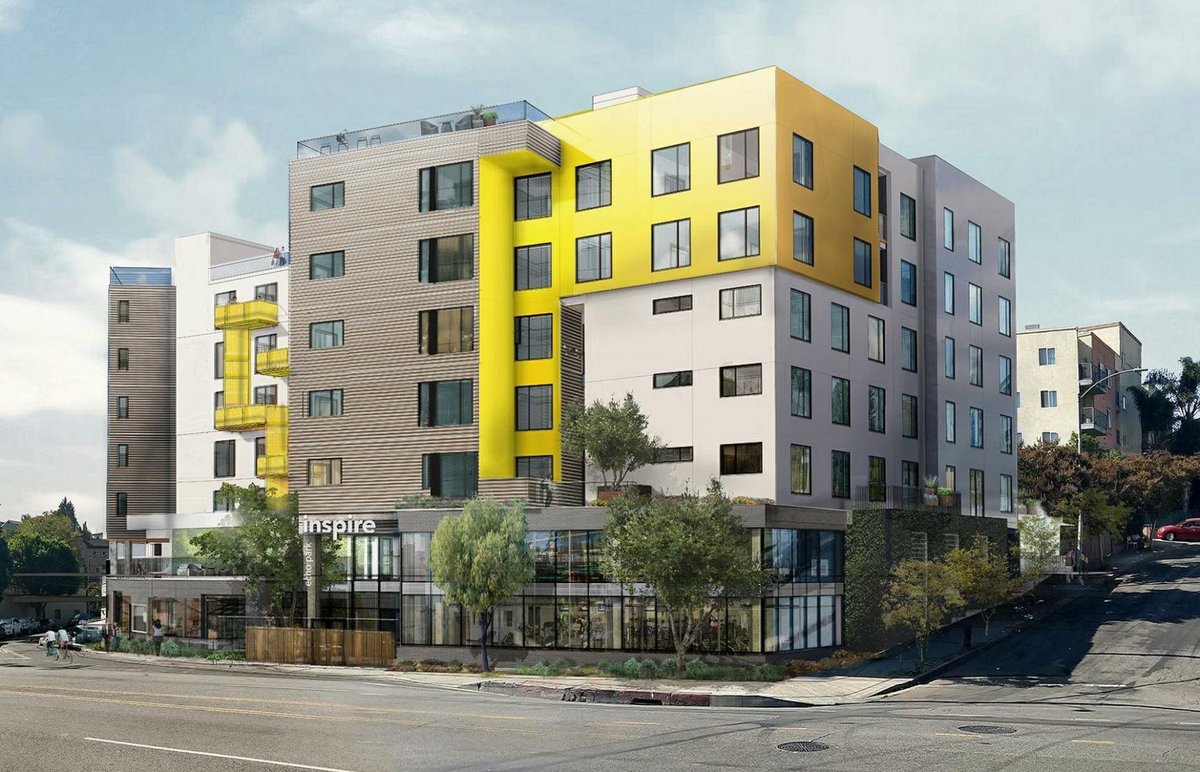
$30.36MM
Construction financing arranged for a multifamily development in Los Angeles, positioned to institutional capital around basis, sponsor execution, project timeline, and takeout strategy.
Common Questions
Direct answers on sizing, guaranties, and structure — based on projects we finance, not generic market copy.
Construction loans are generally sized to the lesser of loan-to-cost and a coverage test on the takeout — commonly up to 65%–75% of total project cost for market-rate deals, with the permanent balance capped at a level the stabilized building can service. We recently arranged a $30.36MM construction-to-permanent loan at 70% of cost for a 90-unit Los Angeles development.
Site control and entitlements in hand, a fully-costed budget with hard costs, soft costs, and contingency, a realistic schedule, a general contractor the lender can underwrite, and a sponsor with completed comparable projects and the liquidity to stand behind the build. Lenders finance execution — not entitlement risk.
Usually at the start — but the guaranty is negotiable. Completion guaranties and repayment guaranties can be structured to burn off as the project hits milestones: completion, lease-up, and a target coverage ratio. Negotiating the burn-off is one of the most valuable points an advisor can win in a construction term sheet.
Construction-to-perm locks the takeout on day one, eliminating the risk of refinancing a finished building into a market that has moved against you. A standalone construction loan can offer more leverage or flexibility but leaves takeout risk open. The right answer depends on the exit — sale, agency, bank, or long-term hold.
Yes — Executive Directive 1 has created a pipeline of streamlined, by-right 100% affordable projects in Los Angeles, and a specific universe of banks, debt funds, and mission-driven lenders is actively financing them. Sizing, reserves, and takeout structure differ from market-rate deals; approaching lenders who know the program is most of the battle.
Submit a Construction Deal
We will review the opportunity and respond with preliminary capital direction, likely lender audience, leverage, pricing, structure, and next steps.
Submit a DealAdvisory led by Andrew Sawyer, Partner & Head of Capital Markets · CA DRE #02074085 · Piccard Financial Broker Lic. #02159069