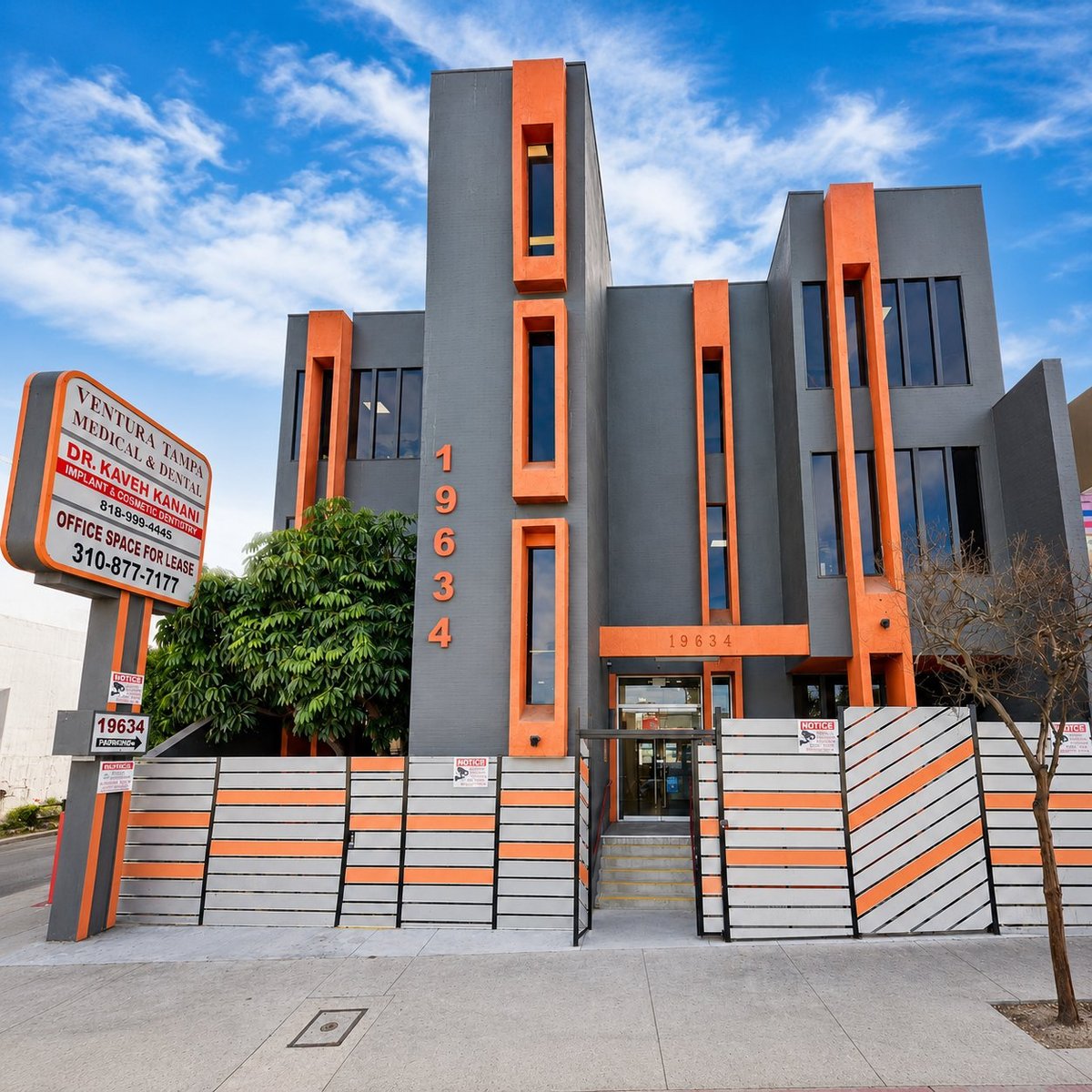
The office headlines describe half-empty towers. They do not describe boulevard-front buildings full of medical groups, law practices, and local firms serving the neighborhoods around them. Lenders know the difference — and a specific universe of them is still quoting office competitively for owners who present the right credit case.
We finance the office the market still wants: small-balance and mid-size buildings with granular rent rolls, medical office, owner-user and majority-occupied buildings, neighborhood professional space, and creative office in supply-constrained submarkets. We are candid about the rest — commodity floor plates competing citywide for corporate tenants face a genuinely narrow lender universe, and if that's the profile, we say so before you spend months finding out.
Where the capital comes from
- Banks. Selectively, and on their terms — but real. Our Tarzana closing ran 65% LTV, 1.25x coverage, 5.70% fixed, 40 days application-to-close, minimal fees, and no depository relationship required. Some banks have a categorical no on office; knowing which ones don't is most of the assignment.
- Credit unions. Balance-sheet discretion and relationship underwriting — often the strongest quotes on well-leased suburban and boulevard office.
- Debt funds and bridge capital. For lease-up, repositioning, tenant rollover, and maturity defense, sized to the stabilized picture at 60–70% of a defensible value.
- SBA and owner-user paths. Majority owner-occupied buildings unlock a different lender universe entirely, with leverage conventional office can't reach.
Lenders have not stopped financing office. They have stopped financing the office story they read about.
What makes office bankable in this market
Verifiable coverage on in-place income — 1.25x is the entry ticket. A granular rent roll where any single expiration is a leasing problem, not an existential one. A submarket with its own demand story: Ventura Boulevard professional space serving the Valley underwrites differently than commodity space competing downtown. Honest leverage at 60–65% of a current valuation. And the right lender list — approaching banks with an office moratorium burns three weeks per polite decline. The full argument is in the Tarzana case study; the coverage math is in the DSCR guide.
Selected office closings
- $2.7MM — 19634 Ventura Blvd, Tarzana. Bank refinance, 5.70% fixed, 65% LTV, 40 days. Read the case study →
- $10.95MM — LA Office & Retail Portfolio, Beverly Hills / Santa Monica / Venice. Fund refinance across three Westside assets.
- $2.25MM — 8560 Wilshire Blvd, Beverly Hills. Retail/office bridge at 8.00%, closed in two weeks. Read the case study →
See office closings on the transactions page →
Rates and terms referenced are drawn from transactions arranged by Piccard Financial, reflect market conditions at the time of closing, and change with the market. Not an offer or commitment to lend.