Multifamily draws the deepest lender universe in commercial real estate — agencies, banks, credit unions, life companies, debt funds, and HUD all compete for it. That depth is an advantage only if someone makes them actually compete on your deal.
We arrange financing across the full multifamily spectrum: stabilized apartment buildings, value-add repositionings, small-balance 5–50 unit properties, rent-stabilized Los Angeles assets, ground-up development, and lease-up transitions. The lender who wins a stabilized 1960s Valley walk-up is rarely the lender who wins a 90-unit TOC development — matching the deal to the right capital, and running two or three sources in competition, is most of the outcome.
Where the capital comes from — and what it's quoting
- Banks and credit unions. The workhorses for small-balance and mid-size apartment loans. Recent Los Angeles multifamily refinances we closed with banks priced at 5.40% and 5.41% fixed (West Hollywood and North Hollywood, 2025) — relationship pricing without agency process. Some require deposits; part of lender selection is finding the ones that don't.
- Agency debt (Fannie Mae / Freddie Mac). The benchmark for stabilized assets $1MM+: non-recourse, 5–30 year terms, underwritten near 1.20x–1.25x coverage at up to 80% leverage in strong markets. Best-in-class structure when the property and timeline fit the box.
- HUD/FHA. The 221(d)(4) construction and 223(f) refinance programs offer the longest terms and highest leverage in the market — 35–40 year fully amortizing, non-recourse — for sponsors with the patience for the process.
- Bridge and debt funds. For value-add plans, lease-up, and maturity defense: 65–75% of value or 70–80% of cost, priced over SOFR, sized to the stabilized takeout.
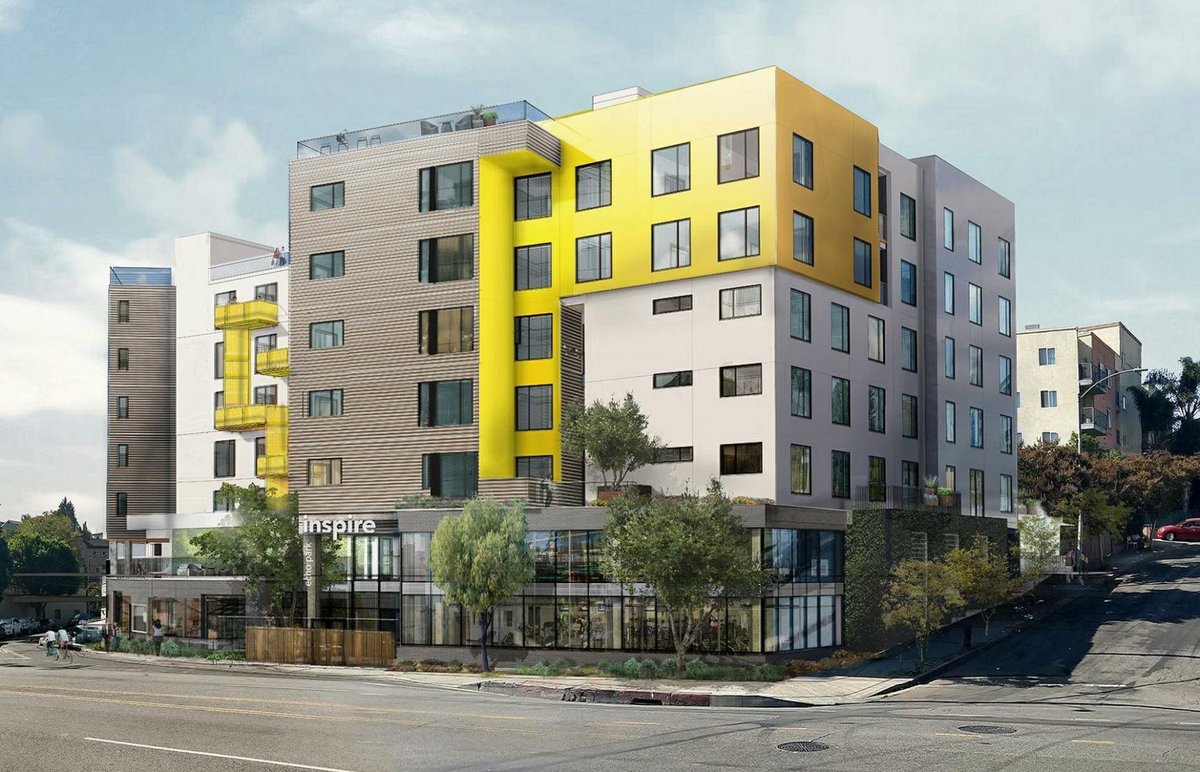
- Construction lenders. Ground-up development sized to the lesser of loan-to-cost and takeout coverage — our Echo Park closing funded 70% of total project cost with a negotiated guaranty burn-off and a permanent conversion locked at close.
The Los Angeles multifamily picture
LA apartment financing carries local math worth knowing before going to market. Density programs — Transit Oriented Communities and ED1 — have created a financeable development pipeline with its own lender audience. Measure ULA has shifted the sell-versus-refinance decision toward cash-out refinancing and recapitalization for assets above the transfer-tax thresholds. And rent-stabilized buildings underwrite on in-place income, which rewards owners who document every legal increase and keep a clean rent roll. We finance across all of it, from ground-up TOC development in Echo Park to small-balance permanent refinances in the Valley.
The lender who wins a stabilized Valley walk-up is rarely the lender who wins a 90-unit development. Matching deal to capital is most of the outcome.
Selected multifamily closings
- $30.36MM — Inspire Echo Park, 90-unit ground-up construction-to-perm, 70% of cost, regional bank. Read the case study →
- $2.1MM — 1008 N Stanley, West Hollywood. Permanent bank refinance at 5.40% fixed (2025).
- $1.825MM — 11613–11617 Moorpark St, North Hollywood. Permanent bank refinance at 5.41% fixed (2025).
- $1.89MM — 1540 W Court St, Los Angeles. Fund execution.
See all multifamily closings on the transactions page →
How an assignment runs
We underwrite the property the way lenders will — in-place income, coverage at market rates, honest vacancy and reserves — then build a lender-ready package and approach the right two or three capital categories in parallel. Term sheets get compared line by line: proceeds, rate, interest-only, recourse, prepayment, and deposit requirements. If your loan is maturing, start with the maturity playbook; if coverage is the constraint, start with the DSCR guide.
Rates and terms referenced are drawn from transactions arranged by Piccard Financial, reflect market conditions at the time of closing, and change with the market. Not an offer or commitment to lend.