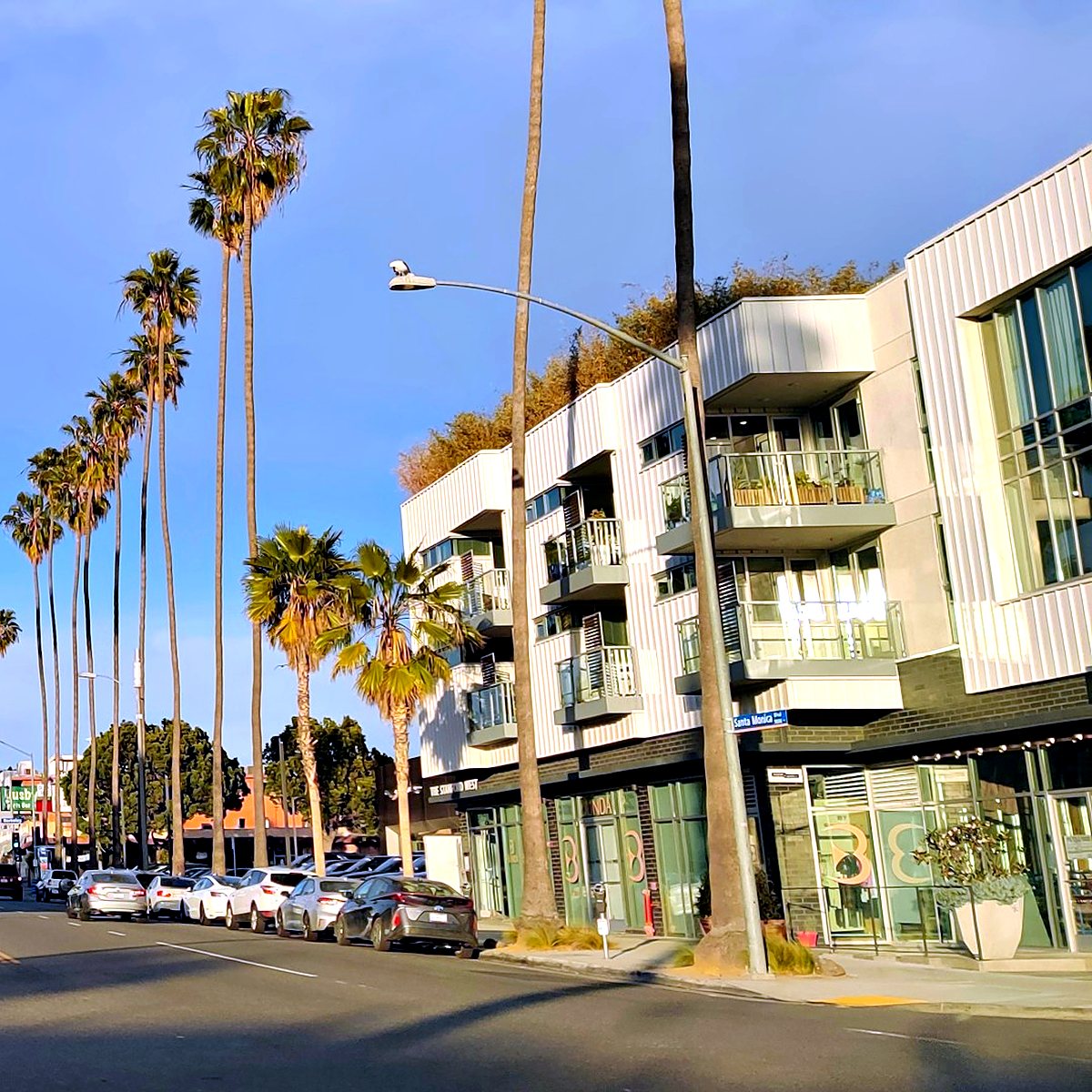
A mixed-use property loan in California is underwritten either as a multifamily loan or as a commercial loan, and the lender decides which by measuring how much of the income and floor area is commercial. When the apartments carry the building, it usually finances as multifamily, with longer amortization, lower coverage requirements, more lenders and a real chance at non-recourse. When the storefronts or offices carry it, it finances as commercial, and in the example below the same building borrows about $445,000 less. With the 10-year Treasury near 5%, that line matters more than it did in the spring.
Where things stand, as of September 22, 2026
- Long rates. The 10-year Treasury was 4.96% on September 21, after closing at 5.01% on September 18, up from 4.19% on January 2. The 5-year was 4.83%.
- Short rates. The Federal Reserve raised its target range to 3.75% to 4.00% on September 16, its first increase since 2023. The prime rate moved from 6.75% to 7.00% the next day. SOFR was 3.85% on September 21.
- Credit. Trepp's August CMBS delinquency rates, reported September 3: retail 7.20% (up 24 basis points), multifamily 7.69% (unchanged), office 12.00%, overall 7.85%.
- Los Angeles storefronts. Colliers put Greater Los Angeles retail vacancy at 6.2% in the second quarter, flat from the prior period.
- Mixed-use quotes. In lender quote surveys from May and July 2026, a stabilized mixed-use acquisition was quoted in May at 70% loan-to-value, non-recourse, at the 5-year Treasury plus 2.20%. A retail and office mixed-use acquisition was quoted in July at 70% and 1.25x, full recourse, priced at prime with a 0.50% fee.
How lenders decide whether your building is multifamily
Fannie Mae counts only "actual income from leased and occupied commercial space," deducts 10% of it, and if net commercial income is greater than 20% of effective gross income, credits only 20%. The sections we reviewed set no square-footage cap. A building with more commercial income is not disqualified; the excess simply earns no loan dollars.
Freddie Mac treats mixed-use as eligible when local zoning allows the commercial use and the space fits the property and neighborhood. It does not publish a fixed percentage. It reviews the commercial share of gross income and square footage, which must be acceptable to it, and commercial rents must be supported by market comparison. Once commercial rent reaches 5% of gross potential rent, leasing costs come out of net operating income, and any lease that size needs a tenant estoppel.
HUD's 223(f) refinance program limits commercial space to 25% of net rentable area and 20% of effective gross income.
SBA loans fit only when the borrower's own operating business occupies the building: at least 51% of the rentable space in an existing building and at least 60% in new construction. Leased apartments count against the remainder, so a mostly residential building will not qualify.
Banks and credit unions set their own policy. In our experience most classify by the majority of income, and a building with mostly residential income goes to the multifamily desk.
The same building can be two different loans. The income split decides which one you are offered.
What changes when the building is classified as commercial
On small loans, the coupon gap can be narrow. The July survey included a $2.3MM multifamily purchase quoted at 6.48% on a 3-year adjustable and a $2.6MM stabilized retail loan at 6.49% on a 5-year adjustable, both full recourse. The real differences sit elsewhere.
Lender pool. Multifamily treatment opens the agencies and the bank and credit union apartment programs. Commercial treatment narrows the field to lenders comfortable with the retail or office income.
Recourse. Agency multifamily is non-recourse, and some banks will do the same on a small apartment loan. The $2.2MM Durango Avenue permanent loan we arranged closed with a bank in July 2026 at 6.085%, non-recourse; our Los Angeles apartment financing guide covers the residential side. Of the six retail and mixed-use permanent quotes under $10MM in the surveys, five carried full or partial recourse.
Structure. Amortization, coverage and leverage are where commercial classification costs the most. A building in transition, with a vacant storefront or below-market leases, may need a bridge first. The 8560 Wilshire retail and office bridge we arranged in Beverly Hills, where in-place rents sat below market, closed in two weeks in March 2026.
How lenders underwrite the ground floor
Vacancy. A dark storefront earns nothing in Fannie Mae underwriting, because only leased and occupied space counts. In our experience, bank and commercial lenders apply a market vacancy factor to the retail even when it is full. Greater Los Angeles vacancy near 6% helps, but lenders underwrite your block, not the county.
Lease terms. Month-to-month tenants, leases rolling inside the loan term and below-market rents all draw haircuts or reserves. Signed leases with remaining term, scheduled increases and clear expense reimbursements are worth more to a lender than a higher rent on a handshake.
Tenant quality. A restaurant with heavy buildout, a use with environmental history or a single tenant paying most of the commercial rent each gets a closer look. Expect estoppels, subordination agreements and tenant financials on large leases.
Separation. Strong files break out residential and commercial income, each with its own vacancy and expenses. Our retail financing page covers how lenders read storefront income.
A worked example: one building, two loans
Take an illustrative two-story Los Angeles building with 12 apartments averaging $2,350 a month and three storefronts paying $2,500 a month each. Gross potential income is $428,400: $338,400 from the apartments and $90,000 from retail, so commercial is 21% of income. Operating expenses are $130,000 and the appraisal is $4.6MM.
Underwritten as multifamily. A 5% vacancy factor leaves $321,480 of apartment income. The lender credits the retail at 90%, or $81,000. Net operating income is $272,480. At an assumed 6.75% rate on a 30-year amortization, the annual debt constant is about 7.78%. At 1.25x coverage the building can carry $217,984 of debt service a year, which supports a loan of about $2.80MM, 61% of value.
Underwritten as commercial. The apartments are treated the same, the retail is credited at 85% ($76,500), and a $6,000 annual reserve for tenant improvements and leasing commissions comes off the top. Net operating income is $261,980. At an assumed 7.10% on a 25-year amortization, the constant is about 8.56%. At 1.30x the building can carry $201,523 a year, which supports about $2.35MM, 51% of value.
The gap is about $445,000. Neither loan reaches its leverage limit (70% would be $3.22MM, 65% would be $2.99MM), so coverage decides proceeds. Most of the gap comes from loan terms, not the retail haircut: the shorter amortization alone costs about $156,000, and the higher rate and higher coverage cost roughly $98,000 each. At 21% of income, the building sits right at the agency line: Fannie Mae's formula would trim credited retail income by about $500. The rates are assumptions, not quotes: the 5-year Treasury at 4.83% plus spreads within the surveys' stabilized multifamily and retail ranges.
California rules that change the math
Housing in commercial zones. AB 2011 and SB 6 took effect July 1, 2023. AB 2011 created a ministerial approval path for housing on commercially zoned land, either fully affordable or mixed-income on commercial corridors, with prevailing wages. SB 6 allows housing on land zoned for office and retail without rezoning, but without the ministerial path. For a lender, ministerial approval removes much of the entitlement risk on a construction or conversion loan.
Density bonus. State density bonus law defines a housing development as a project of five or more residential units, "including mixed-use developments." Storefront-and-apartment projects qualify.
Los Angeles adaptive reuse. The Citywide Adaptive Reuse Ordinance took effect February 1, 2026. It covers buildings at least 15 years old in projects creating five or more homes, and most projects qualify for by-right approval. Converting upper-floor offices to apartments can move a boulevard building from commercial to multifamily classification; the conversion itself is a bridge or construction loan sized to the stabilized result.
Rent control. Apartments in a mixed-use building are covered like any others. Statewide, AB 1482 caps increases at 5% plus inflation or 10%, whichever is lower, exempts housing with a certificate of occupancy within the previous 15 years, and runs until January 1, 2030. In the City of Los Angeles, the Rent Stabilization Ordinance applies to rental properties first built on or before October 1, 1978, and since February 2, 2026 its annual increase follows 90% of inflation with a 1% floor and a 4% ceiling. Lenders underwrite the rents you can legally collect, so a clean, documented rent roll protects proceeds.
What owners should do before they apply
- Calculate your split. Commercial share of income and floor area, measured against the 20% agency income line, before a lender does it for you.
- Build two rent rolls. Residential and commercial, each with square footage, lease start and end dates, increases and reimbursements.
- Fix the ground floor first. Sign the vacant storefront, convert month-to-month tenants to leases, and order estoppels early.
- Confirm rent control status unit by unit. RSO, AB 1482 or exempt, with the legal rent for each.
- Price both executions. Compare proceeds, recourse, amortization and prepayment, not only the rate. Our permanent loan work starts with that comparison.
- Map the takeout on any conversion. If the plan changes the mix, size the bridge to the classification the finished building will earn.
Quick answers
Can I get a Fannie Mae or Freddie Mac loan on a mixed-use building? Often, yes. Fannie Mae credits commercial income up to 20% of effective gross income after a 10% deduction. Freddie Mac has no fixed percentage but must accept the commercial share of income and square footage.
How much commercial space can a building have and still finance as multifamily? It depends on the program. HUD's 223(f) allows 25% of net rentable area and 20% of income; Fannie Mae and most banks work from income share.
What are mixed-use loan rates right now? There is no single rate. The May survey's stabilized mixed-use quote, 5-year Treasury plus 2.20%, works out to about 7.0% with the 5-year at 4.83% on September 21. Our bank multifamily closings at 5.40% to 6.085% priced between August 2025 and July 2026, with the 10-year between about 4.0% and 4.75%. With the 10-year near 5%, new fixed-rate pricing starts higher.
Does SBA finance mixed-use buildings? Only when your own business occupies at least 51% of an existing building, or 60% of new construction.
If you own or are buying a mixed-use building, send us the rent roll split by use. We will tell you within two business days how lenders will classify it and what each execution would lend. See also our mixed-use financing and multifamily financing pages.
Sources. Treasury yields: U.S. Treasury daily par yield curve, September 21, 2026; FRED DGS10, January 2 and September 18, 2026. SOFR: Federal Reserve Bank of New York, September 21, 2026. Fed decision: Federal Reserve, September 16, 2026. Prime rate: Reuters via Kitco, September 16, 2026. CMBS delinquency: Trepp via CRE Daily, September 3, 2026. Los Angeles retail vacancy: Colliers via CRE Daily, September 1, 2026. Fannie Mae: Multifamily Selling and Servicing Guide, Part II, Section 203.01, version effective August 26, 2026. Freddie Mac: Multifamily Seller/Servicer Guide, Chapter 8, Sections 8.2 and 8.11, bulletin of August 25, 2026. HUD: MAP Guide 4430.G, Section 3.7.18, effective March 18, 2021. SBA: 13 CFR 120.131. AB 2011 and SB 6: Venable, July 13, 2023. Density bonus: Government Code 65915(i), 2025 code. Adaptive reuse: Los Angeles City Planning, February 9, 2026; Alston & Bird, Land Use Matters, March 2026. Rent control: Civil Code 1947.12, 2025 code; Los Angeles Housing Department; Los Angeles Council District 4, updated July 2, 2026. Quote examples: lender quote surveys covering May and July 2026, used with permission. The loan sizing example is illustrative.
Rates and terms referenced are drawn from public market data, transactions arranged by Piccard Financial and recent lender quotes, reflect conditions on the dates shown, and change with the market. Nothing here is an offer or a commitment to lend. Piccard Financial is a capital markets advisory firm, not a lender.