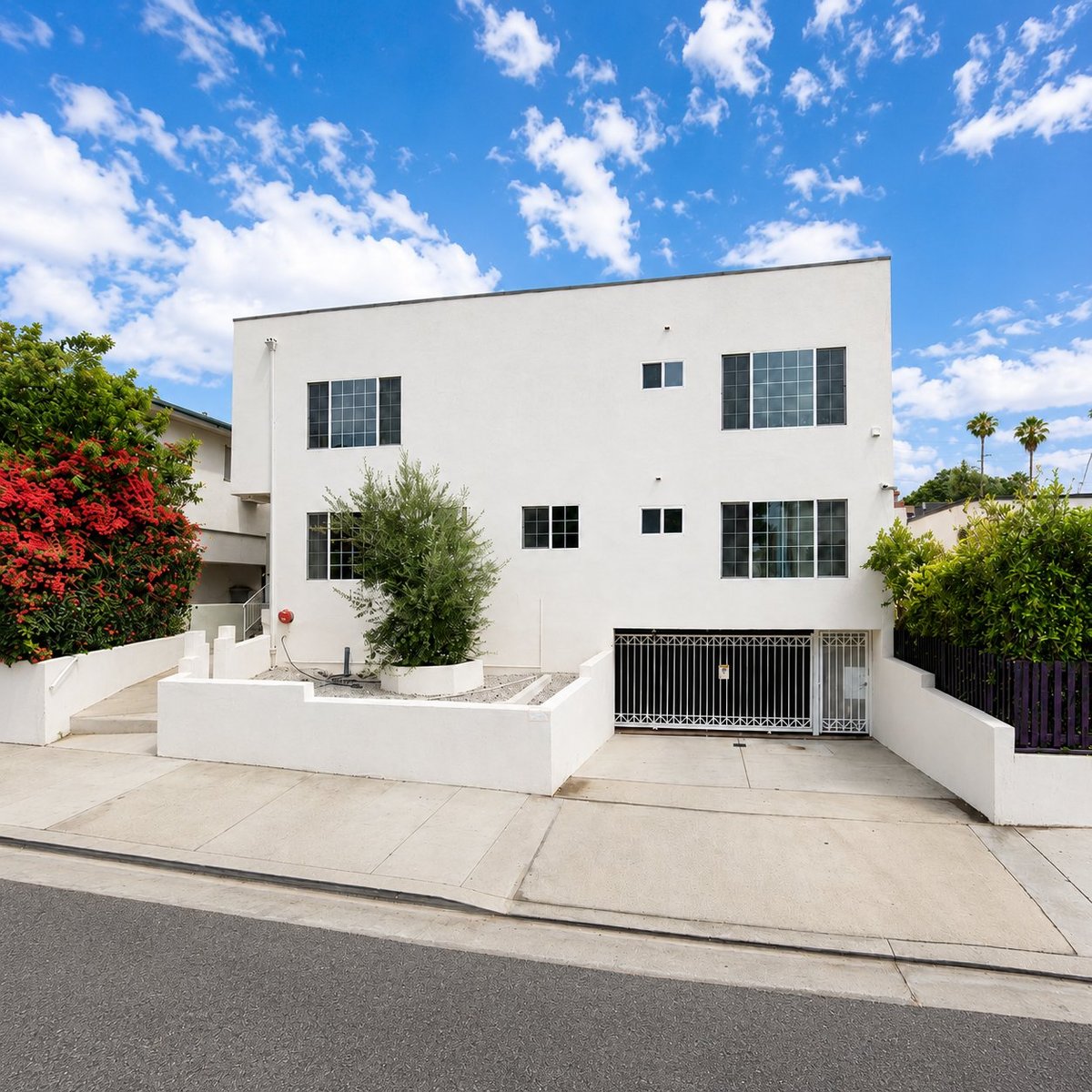
Los Angeles apartment owners sit in one of the strongest borrower positions in commercial real estate. Lenders of every category compete for stabilized LA multifamily, and the spread between the best available loan and the loan your current bank offers is often wider than owners expect. This guide covers the full menu, who each option actually fits, and the numbers that decide proceeds.
Who lends on LA apartment buildings, and when each wins
Banks and credit unions are the workhorses for buildings from five units up through mid-size assets. Recent Los Angeles refinances we closed with banks priced at 5.40% and 5.41% fixed in 2025, and a July 2026 closing on a six-unit Westside building funded at 6.085% fixed, non-recourse, in 40 days. Portfolio lenders offer flexibility agencies cannot, some lend without a deposit relationship, and at conservative leverage they will negotiate structures most owners never think to request.
Agency debt through Fannie Mae and Freddie Mac is the benchmark for stabilized buildings, generally from $1MM up. Non-recourse as standard, fixed terms from 5 to 30 years, leverage to 75% or 80% in strong submarkets, and underwriting near 1.20x to 1.25x coverage. The trade is process and prepayment rigidity. When a building fits the box, agency execution is hard to beat on structure.
Bridge and debt fund capital serves buildings in transition: value-add renovations, lease-up after ADU additions, buyouts, and maturity situations where the permanent numbers do not pencil yet. Expect 65% to 75% of value, pricing over SOFR, and a loan sized to the stabilized takeout rather than today's income.
Construction lenders fund ground-up development, typically 65% to 75% of cost. Our largest recent example is a $30.36MM construction-to-permanent loan for 90 units in Echo Park at 70% of total project cost.
The three numbers that decide your proceeds
- DSCR. Net operating income divided by annual debt service, with most lenders requiring 1.20x to 1.25x. At today's rates this is almost always the binding constraint, not loan-to-value. The full math and the five fixes are in our coverage guide.
- Underwritten NOI. Lenders apply their own vacancy, management, and reserve assumptions to your operating statement, and their number is usually lower than yours. A professionally scrubbed trailing twelve months routinely recovers 5% to 10% of supportable income.
- Leverage tier. Pricing improves in steps as leverage falls. Below 50% loan-to-value, doors open that most owners do not know exist, including non-recourse on small buildings and interest-only periods.
At today's rates, coverage decides proceeds. Loan-to-value is rarely the constraint that binds.
Submarket notes from our own book
Lenders read Los Angeles block by block, and so should your financing strategy. On the Westside, from Beverlywood and Pico-Robertson through West LA, small-balance buildings command the deepest lender competition in the city, and a well-presented credit case buys institutional structure, as our recent Durango Avenue closing shows. In West Hollywood and Hollywood, rent-stabilized walk-ups finance routinely when the rent roll is documented and collections are clean; our 1008 N Stanley refinance closed at 5.40% fixed. The San Fernando Valley, from North Hollywood through Van Nuys and Reseda, is quietly one of the most bankable apartment markets in the county, with loan sizes banks love; our Moorpark Street refinance in North Hollywood closed at 5.41%. In the South Bay, including Torrance, Gardena, and Hawthorne, aerospace and port employment gives lenders a demand story they trust. And in the urban core, Koreatown and Mid-City density plays plus TOC and ED1 development pipelines draw both agency and construction capital.
Rent stabilization, ADUs, and the LA-specific questions
Three local factors shape almost every LA apartment loan. Rent stabilization is not a financing obstacle when the paperwork is right: lenders underwrite in-place income, so documented legal increases and a clean rent roll are what protect your proceeds. ADU additions have changed the small-building math across the city; added units increase income and value, and the refinance after stabilization is where that value gets captured, ideally with the new leases seasoned before you go to market. Measure ULA has shifted the sell-or-hold decision for higher-value assets toward cash-out refinancing, since pulling equity through debt avoids the transfer tax a sale triggers.
How to run the process
Start 6 to 12 months before any maturity, per our maturity playbook. Build the package lenders actually read, covered in what lenders want to see: a month-by-month trailing twelve, a reconciled rent roll, and a clean story. Then put two or three lender categories in genuine competition. The spread between quotes on identical information is routinely wider than owners expect, and competition is the only thing that closes it in your favor. The full capital menu lives on our multifamily financing page.
If you own an apartment building anywhere in Los Angeles and want a read on what the market would do with it, send us the property overview or call the desk at 310.363.5136. Response within two business days, usually same day.
Thinking about pulling equity out instead? Our October 2026 piece on cash-out refinancing an LA apartment building works the numbers at today's rates.
Rates referenced are from transactions arranged by Piccard Financial, reflect market conditions at the time of closing, and change with the market. Not an offer or commitment to lend. CA Broker Lic. #02159069.