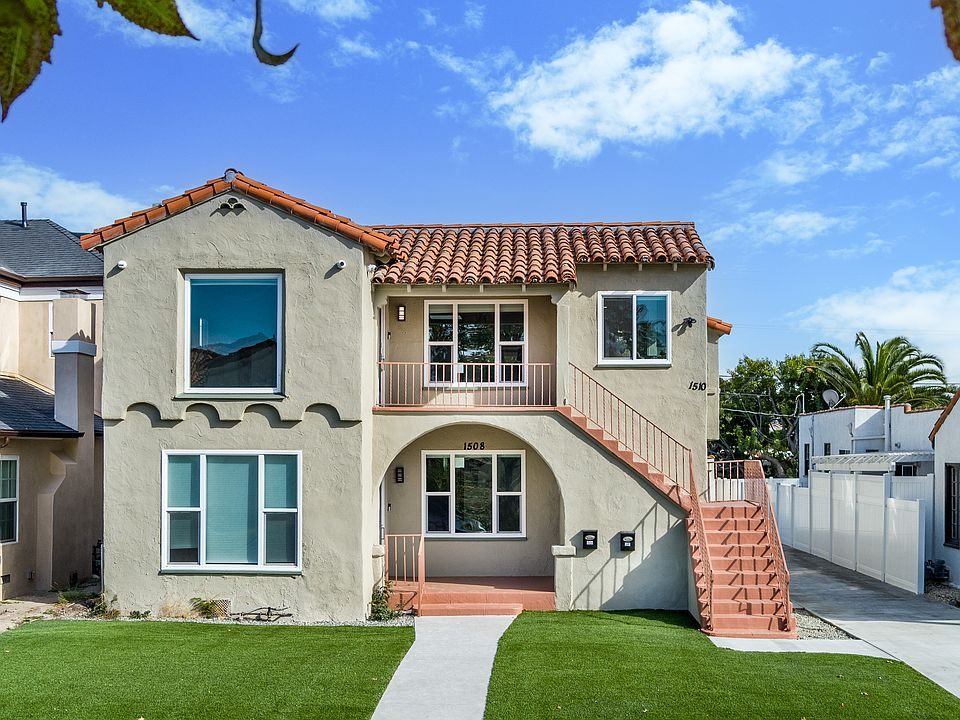
This week we closed a $2.2MM permanent loan on a six-unit apartment building at 1508 to 1510 S Durango Ave on the Westside of Los Angeles. The terms are the story: non-recourse, 6.085% fixed for the initial five years of a 30-year term, a negotiated yield maintenance rate discount, and 40 days from application to funding.
Most owners of buildings this size assume those terms are reserved for institutional deals. They are not. What they are reserved for is well-prepared deals presented the way credit officers read, and this closing is a clean illustration of how that trade works.
The deal
The property is a classic Westside asset: a Spanish-style walk-up in the Beverlywood and Pico-Robertson corridor, six units, fully stabilized, the kind of building that anchors family portfolios across Los Angeles. The owner wanted long-term fixed-rate debt sized comfortably inside the property's cash flow, with no personal guaranty riding on it.
The financing request was built around the property's cash flow, with debt service coverage sitting comfortably above the 1.20x to 1.25x threshold that governs most apartment lending. That cushion, together with a clean and verifiable income story, is what unlocked everything else in the structure.
Why the lender went non-recourse on a six-unit building
Personal guaranties exist to protect lenders from thin deals. When the collateral is a stabilized building with granular, verifiable income and the credit case leaves the lender an ample cushion, the collateral itself provides the protection, and the guaranty becomes negotiable. Banks rarely advertise this. It surfaces when the asset and the presentation give the credit officer room to say yes, and when someone at the table knows to ask.
For the owner, the difference is real. Non-recourse debt means the loan lives with the building, not with the family balance sheet. For estate planning, for partnership structures, and for owners who hold multiple properties, removing the personal guaranty is frequently worth more than a few basis points of rate.
Institutional loan terms are not reserved for institutional deals. They are reserved for deals presented the way credit officers read.
The prepayment decision: yield maintenance for 24 basis points
One structural choice on this deal is worth explaining, because most borrowers face it without realizing it is a choice. The program offered a rate discount of 24 basis points in exchange for accepting yield maintenance prepayment instead of a standard declining schedule. We took the discount.
The logic: yield maintenance makes early payoff expensive, so it is the wrong trade for an owner who expects to sell or refinance quickly. This owner intends to hold. On a long-hold asset, the prepayment flexibility being given up has little practical value, while 24 basis points of rate compounds in the owner's favor every year of the term. The right prepayment structure depends entirely on your exit plan, which is exactly the kind of question a capital markets advisor should be pressing before the term sheet is signed, not after.
What this closing says about the LA apartment loan market
Apartment building owners in Los Angeles are quietly sitting in one of the best borrower positions in commercial real estate. Lenders compete hard for stabilized apartment collateral, loans clear credit committees quickly, and a strong credit profile buys structure that most owners never think to request: non-recourse, rate discounts, flexible terms. We covered the broader landscape in our guide to apartment building loans in Los Angeles, and the pattern in this closing matches what we see across the market.
The 40-day timeline is also worth noting. Speed on this deal did not come from a special program. It came from a complete package on day one: rent roll tied to the trailing twelve months, clean operating statements, and a presentation built the way credit officers read. The package standard is the same one we describe in what lenders want to see, and it is the difference between 40 days and 90.
If you own an apartment building in Los Angeles
Two questions are worth asking about your current debt. First, does your loan carry a personal guaranty that the right structure could remove at the next refinance? Second, if your loan was written before 2023, what does the maturity picture look like, and when should the refinance process actually start? Our maturity playbook covers the timeline, and the multifamily financing page covers the full capital menu.
If you would rather just talk through your building, send us the property overview or call the desk at 310.363.5136. We respond within two business days, usually the same day.
Terms described reflect this specific transaction and market conditions at closing. Lender identity is confidential. Nothing here is an offer or a commitment to lend.